
Imagine being able to use the tools you use on a daily basis without having to search or wait for a platform to open. CentralReach Essential Login does just that.
This tutorial will assist you in effectively logging in and utilizing the key functionalities that maintain a productive and orderly practice.
The Significance of CentralReach
Prior to delving into the login procedure, let’s examine why CentralReach has grown to be such a vital resource for so many. It may be extremely difficult to manage client data, schedule appointments, track progress, bill & ensure compliance in a sector as specialized as ABA. These tasks are combined into a single, user-friendly platform by CentralReach, which provides an extensive toolkit that consists of:
- Clinical Management: Data gathering, treatment planning, progress tracking, and session note tools. Therapists are able to concentrate less on administrative duties and more on patient care as a result.
- Practice Management: Credentialing, payroll, claims processing, scheduling, and billing features. This makes operations more profitable and efficient.
- Analytics and Reporting: Strong reporting features that offer information on employee performance, customer progress, and financial health. Better decision-making is supported by this data-driven strategy.
- Security and Compliance: Made to adhere to HIPAA regulations, guaranteeing the safe management of private patient data.
Essentially, CentralReach gives professionals the tools they need to provide better care, increase operational effectiveness & help their customers achieve better results.
Your Gateway: The Crucial CentralReach Login
Your safe entryway to all these strong features is the CentralReach Essential Login. Because of its simple design, authorized users may access their accounts with speed and security.
How to Log In: A Comprehensive How-To
Usually, the login procedure is simple:
- Go to the login page for CentralReach: Typically, your company will send you a direct URL, or you may search for “CentralReach login” on Google to get it. Locate the CentralReach official webpage.
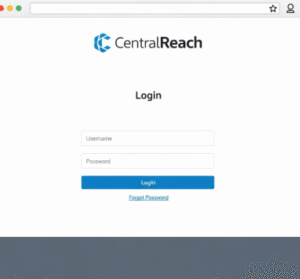
- Put in your username here: Usually, the administrator of your organization provides this. It might be a certain username format, your email address or an employee ID.
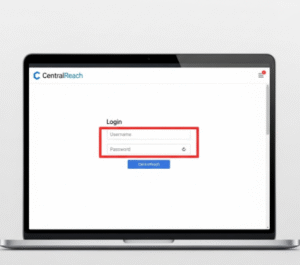
- Put in your password here: Initially, your administrator will also supply this. It is strongly advised that you change this default password when you first log in for security reasons.
- Click either “Sign In” or “Log In”: To access your dashboard after entering your credentials, just click the login button.
What Happens If Your Password Is Forgotten?
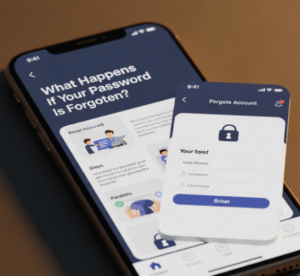
Even the finest of us experience it! Don’t worry if you can not remember your password. There is often a “Forgot Password?” or “Reset Password” link on the CentralReach login page. When you click on this link, you will usually be prompted to enter your account’s username or email address. An email containing instructions on how to change your password will subsequently be sent to you. In the event that you do not immediately notice the email, always check your spam or trash folder.
Solving Frequently Occurring Login Problems
Even if it’s supposed to go well, there may be a bump on the road. The following list of typical problems and their fixes:
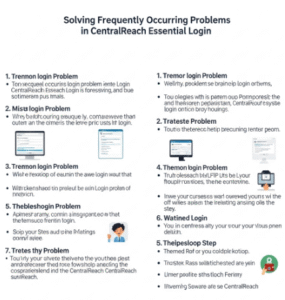
- The password or username is incorrect: Verify your credentials one more time for errors. Most of the time, passwords are case-sensitive.
- Internet connectivity problems: Make sure your connection is steady. The website may not load properly or your login request may not be submitted if your connection is bad.
- Browser Compatibility: Chrome, Firefox, Edge & Safari are the most recent web browsers that CentralReach is made to function with. Be sure to upgrade your browser to the most recent version, though. Sometimes the solution is to clear the cache and cookies in your browser.
- Account Lockout: For security reasons, your account may be momentarily locked after several unsuccessful login attempts. Use the “Forgot Password?” option or wait a few minutes and try again if this occurs.
- Organizational-Specific Issues: Occasionally, the problem may be related to the internal network or settings of your company. The best course of action in these situations is to get in touch with your CentralReach administrator or IT department.
Top Security Tips for Your Crucial CentralReach Login
Hey buddy, it’s critical to secure private patient information. The following are important security best practices to remember:
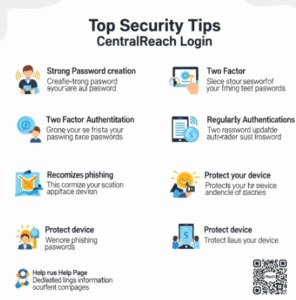
- Strong, One-of-a-Kind Passwords: Make a complicated password that incorporates symbols, numbers, and capital and lowercase characters. Steer clear of information that may be guessed, such as birthdays or frequent nouns.
- Use two-factor authentication (2FA): at all times if your company has enabled it. By requiring a second form of verification (such as a code from your phone) in addition to your password, this offers an additional degree of protection.
- Log Out After Every Session: Always log out of your CentralReach account after you’re done, especially if you’re using a shared computer.
- Phishing Attempts: Watch out for dubious emails or links purporting to be from CentralReach. Before clicking on any links or entering your credentials, always be sure the sender and the URL are correct.
Do not Share Your Information Keep your login information private at all times.
In conclusion
Hi Reader, More than simply a username and password, the CentralReach Essential Login serves as your gateway to a world of improved patient care, efficiency and compliance. You may guarantee smooth access to this crucial platform by being aware of the login procedure, being able to handle typical problems and following strict security guidelines. With the help of CentralReach, medical professionals can spend more time doing what really counts—providing outstanding therapy and significantly improving the lives of people they care for.
10 FAQS:
CentralReach Essential Login: What is it?
It serves as a secure entry point to your CentralReach account, which provides clinical tools and practice management.
Who makes use of CentralReach most often?
Healthcare workers, such as therapists, behavior analyzers, and administrators, particularly those involved in ABA therapy.
What details are required for me to log in?
Your password and username.
Where is the CentralReach login page located?
Usually, by looking for "CentralReach login" online or by using a direct URL from your company.
In the event that I forget my password, what should I do?
On the login screen, click the "Forgot Password?" link, then follow the prompts.
Are the passwords for CentralReach case-sensitive?
Indeed, most passwords are case-sensitive.
Which typical problem is blocking you from logging in?
incorrect password or login, or issues with internet access.
Is it necessary to log off at the end of each session?
Yes, for security reasons, particularly on shared computers.
How does the CentralReach login relate to 2FA?
An additional security measure that calls for a second verification method is called two-factor authentication.
Who should I get in touch with if my login problems persist?
The IT department or CentralReach administrator of your company.